
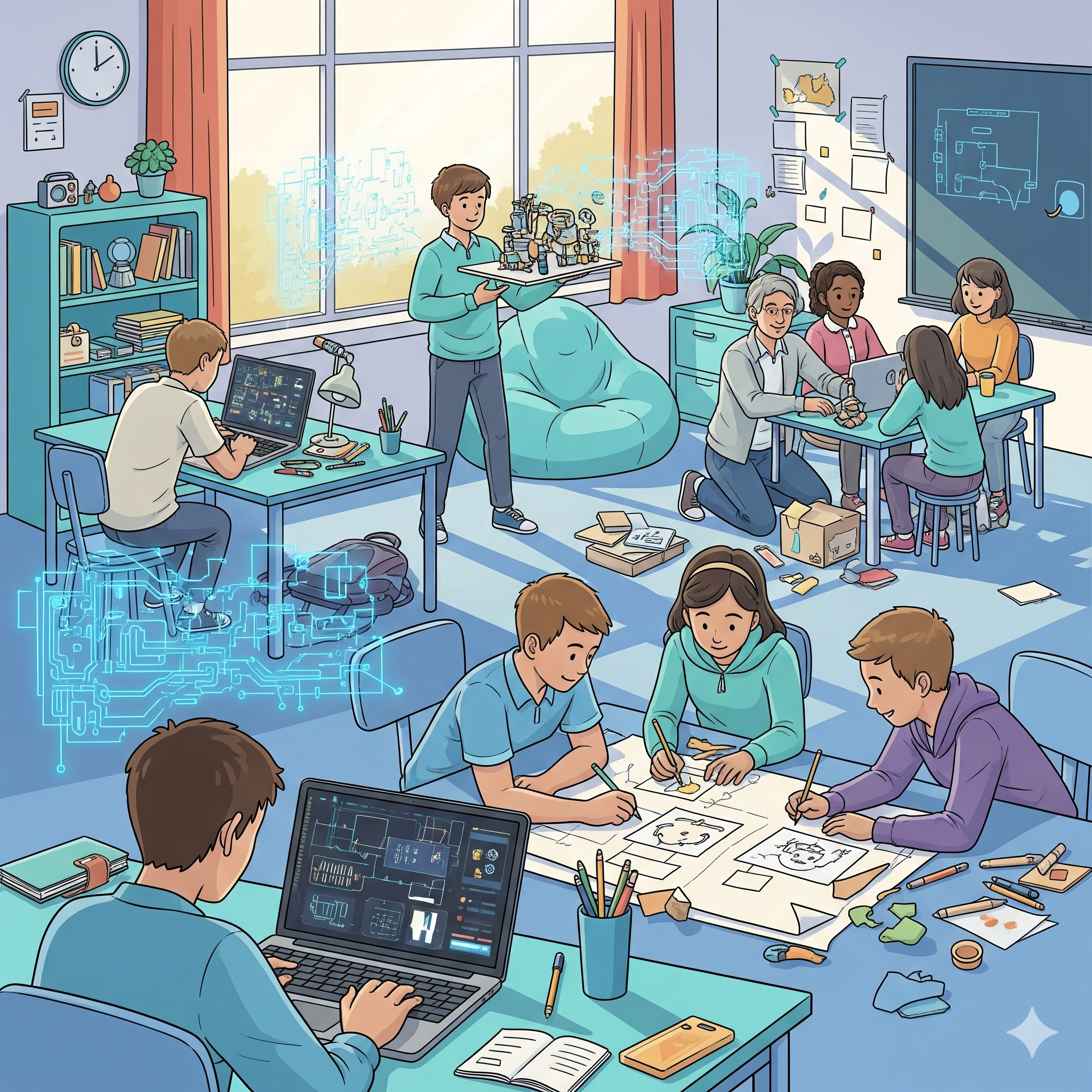
In today’s rapidly evolving educational landscape, the traditional one-size-fits-all approach is increasingly giving way to personalized learning models. These models recognize the unique strengths, needs, and learning paces of individual students, aiming to create more flexible, student-centered classrooms. The integration of Artificial Intelligence (AI) into education is playing a pivotal role in this transformation, offering tools that not only enhance student engagement but also alleviate administrative burdens on teachers, allowing them to focus more on one-on-one coaching.
The Case for Personalized Learning: Recent Statistics
Research indicates that personalized learning can significantly enhance student outcomes. Students engaged in personalized learning programs have demonstrated improvements of 8 percentile points in mathematics and 9 percentile points in reading over a single academic year. Additionally, schools implementing personalized learning approaches have reported a 12% increase in attendance and a 15% decrease in dropout rates, underscoring the potential of tailored educational experiences to foster better academic performance and student retention (see https://www.matsh.co/en/statistics-on-personalized-learning-effectiveness/).
AI: A Catalyst for Personalized Education
Artificial intelligence is revolutionizing the educational sphere by providing adaptive learning platforms that cater to individual student needs. AI-driven tools can analyze student performance data to deliver customized content, ensuring that each learner receives appropriate challenges and support. Moreover, AI can significantly reduce the time teachers spend on administrative tasks. A recent survey revealed that 42% of educators found that AI applications helped decrease the time devoted to administrative duties, allowing them to allocate more time to direct student interaction and personalized instruction (EdTech Magazine, 2024). This finding highlights AI’s role in augmenting educators’ ability to provide meaningful, individualized support.
Empowering Teachers Through AI Integration
The integration of AI in education is not about replacing teachers but enhancing their capabilities. By automating routine tasks and providing insights into student progress, AI enables educators to focus on more impactful teaching strategies, such as individualized coaching and mentorship. This shift allows for a more personalized approach to education, where teachers can address the specific needs and potential of each student.
Steps to Implement Personalized Learning in Schools
For educators and administrators looking to transition toward personalized learning, the following steps (derived from the work of Dabae Lee, 2014) can serve as a guide:
1. Designing a personalized learning plan (PLP);
2. Creating project- or problem-based learning activities;
3. Designing a competency-based student progress (CBSP) and assessment strategy rather than conventional time-based efforts;
4. Implement multi-year mentoring (MYM) of students by a teacher.
By embracing these strategies, schools can create a more dynamic and responsive educational environment that caters to the diverse needs of their student population, preparing them effectively for future challenges.
Leave a Reply